Our new report reveals how our bodies are adapting as office workers return to old routines.
For many of us, more of our working days have returned to the office. The office attendance rate is the highest it has been since before the pandemic, reaching above 40% every week since the start of this year.*
And, commuting by train is on the rise, with rail usage hitting 466 million journeys in October-December 2025, up 4% year on year.*
We’ve previously conducted research to review how Brits were working from home, but as office workers return to old routines, how are our bodies keeping up?
We decided to commission a survey across 1,000 UK workers to find out what our work patterns look like today and how they’re impacting our health.
We’ve also teamed up with celebrity osteopath, Nadia Alibhai, widely known as Nadia The Osteopath, to reveal how our commute and work habits affect our bodies, including the importance of adding small moments of movement into our days.

Meet The Expert
Nadia Alibhai, widely recognised as ‘Nadia The Osteopath’, has 20 years’ experience in clinics and is founder and director of Back 2 Well-Being. Nadia specialises in posture, pain and structural alignment.
The five day working week is back for many.
Since 2020 and the rise of hybrid working, working from home has become increasingly popular, with many adapting to flexible working arrangements. But, is that still the case today?
Our research found that five days in the office is back, with the majority of respondents stating they attended the office each working day of the week (32%).
What bags do we use to commute?
Backpacks were the preferred work bag across all age groups (22%). However, 15% of Gen Z (18-24-year-olds) admitted they sometimes use a cross-body bag and 10% of Millennials admitted they occasionally use a tote bag.
Older age groups were also guilty of bad habits, with over one in 6 of 45-54-year-olds admitting they wear a backpack on one shoulder (16%) and over one in 5 of 55-64-year-olds revealing they used a single-strap shoulder bag (22%).
Brits revealed they take up to as many as fifteen items each day in their work bag. The top five most popular items were revealed as:
- Packed lunch (54%)
- Water bottle (51%)
- Laptop (46%)
- Tech accessories (35%)
- Tablets (21%)
There were some generational differences too. 18% of Gen Z revealed they carry an additional monitor compared to none of those aged 55+.
Nadia explains the importance of packing your backpack correctly for work: “Backpacks are the best bag to use for an even load on your body as they distribute weight across both shoulders and allow the spine to stay more centred, especially when worn on both straps and adjusted well.
“Make sure the firmest thing in your bag is closest to your spine, such as your laptop or a notebook, and load soft items on top of this. Keeping the flattest, firmest object next to your spine will help to support your back.”
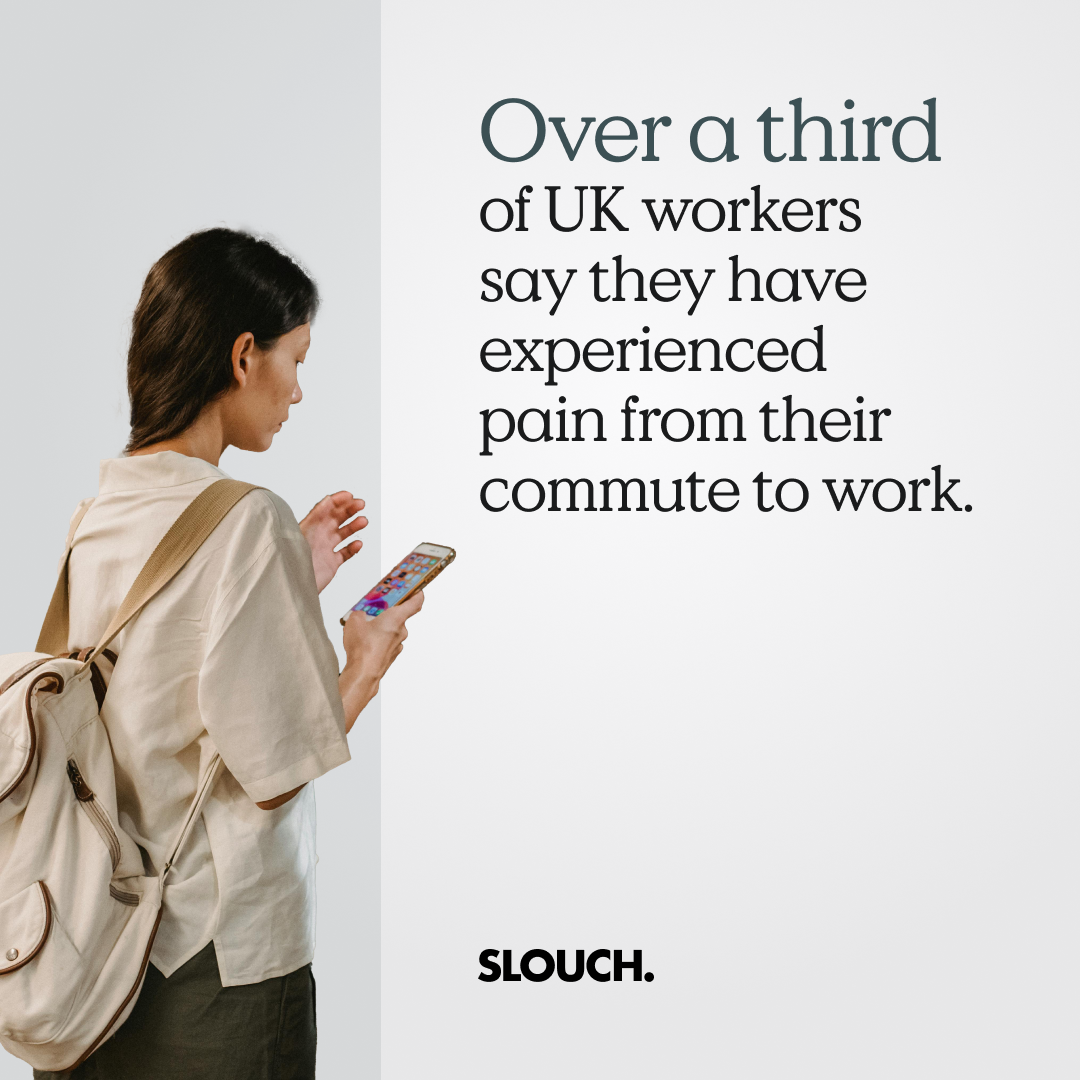
Over a third of commuters say they are in pain.
In the last 12 months, over a third of respondents said they have experienced pain associated with commuting to work (37%), with 14% stating they experience this several times a week.
Women were more likely to report pain more than men (41% vs 33%), potentially thanks to women being more likely to carry multiple bags on their commute to work vs men (15% vs 8%).
Nadia says: “When we carry multiple bags, the body is asked to organise around several points of load rather than one, causing a more complex pattern of compensation. Even if the weight is spread out, different straps and positions can pull through the shoulders, chest, and upper back in slightly competing ways, asking muscles like the trapezius and deeper spinal stabilisers to work harder to keep you balanced.”
When asked where respondents feel this discomfort most, the top five recorded symptoms were revealed as:
- Shoulder pain/tightness (41%)
- Neck pain/tightness (31%)
- Upper back pain (25%)
- Lower back pain (23%)
- Tight hips (14%)
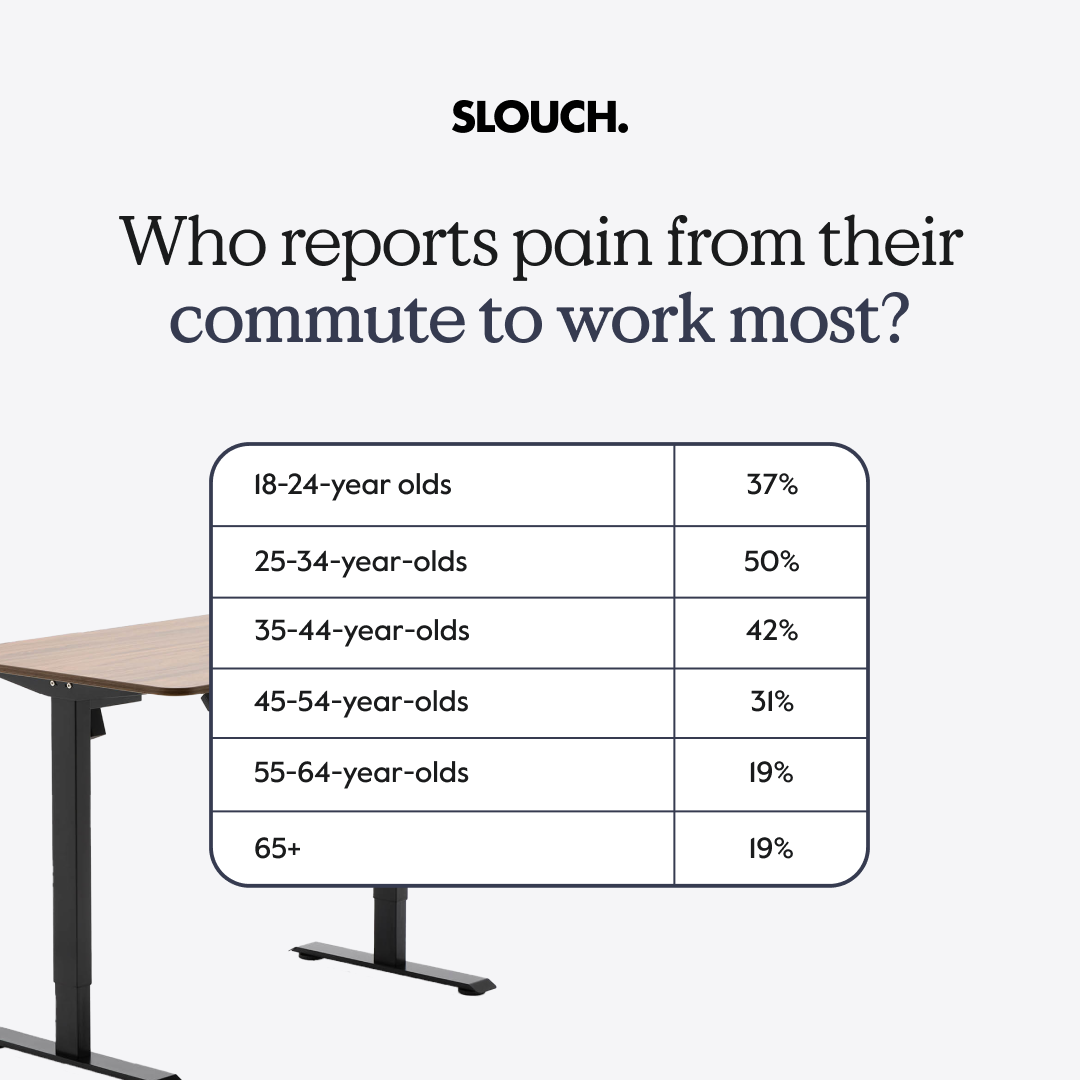
Who reports pain most?
The Generational Gap
While you’d normally expect mobility issues to increase with age, our research found that Gen Z were the most likely to report tight hips (34%), more than double the proportion of 45-54-year-olds (16%), 55-64-year-olds (7%) and those aged 65+ (11%).
Gen Z were also more likely to report shoulder spasms (21%) than older age groups, with just 9% of 55-64-year-olds and 6% of those aged 65+ experiencing the same issue.
In over-65s however, shoulder pain and tightness (54%), lower back pain (46%) and neck pain was more prominent (40%). Neck pain was found to rise steadily with age, affecting four in 10 adults over 55 (40%).
Light bags can still cause strain.
43% of respondents claimed they carry one bag with a manageable load, but Nadia shares why this can still cause issues…
“Even if you’re carrying a bag that is very light, it can still place strain on the body as it sends a signal to your brain that you’re carrying something, which causes your body to adjust.
“The body adapts by organising around that weight, engaging the neck, shoulder and spinal stabilising muscles, which can lead to tension and imbalance.
“Single-strap bags held on one shoulder can cause the shoulder to raise up to your ear, which causes the trapezius, the neck and upper back muscles to tighten up and round forwards.”
Hybrid working patterns are still popular.
While full-time office rates have increased, hybrid working arrangements still appear to be popular with almost two in five respondents stating that they attend the office either three or four days a week (37%). Just 8% selected that they are fully remote.
Remote workers report different injuries compared to office workers.
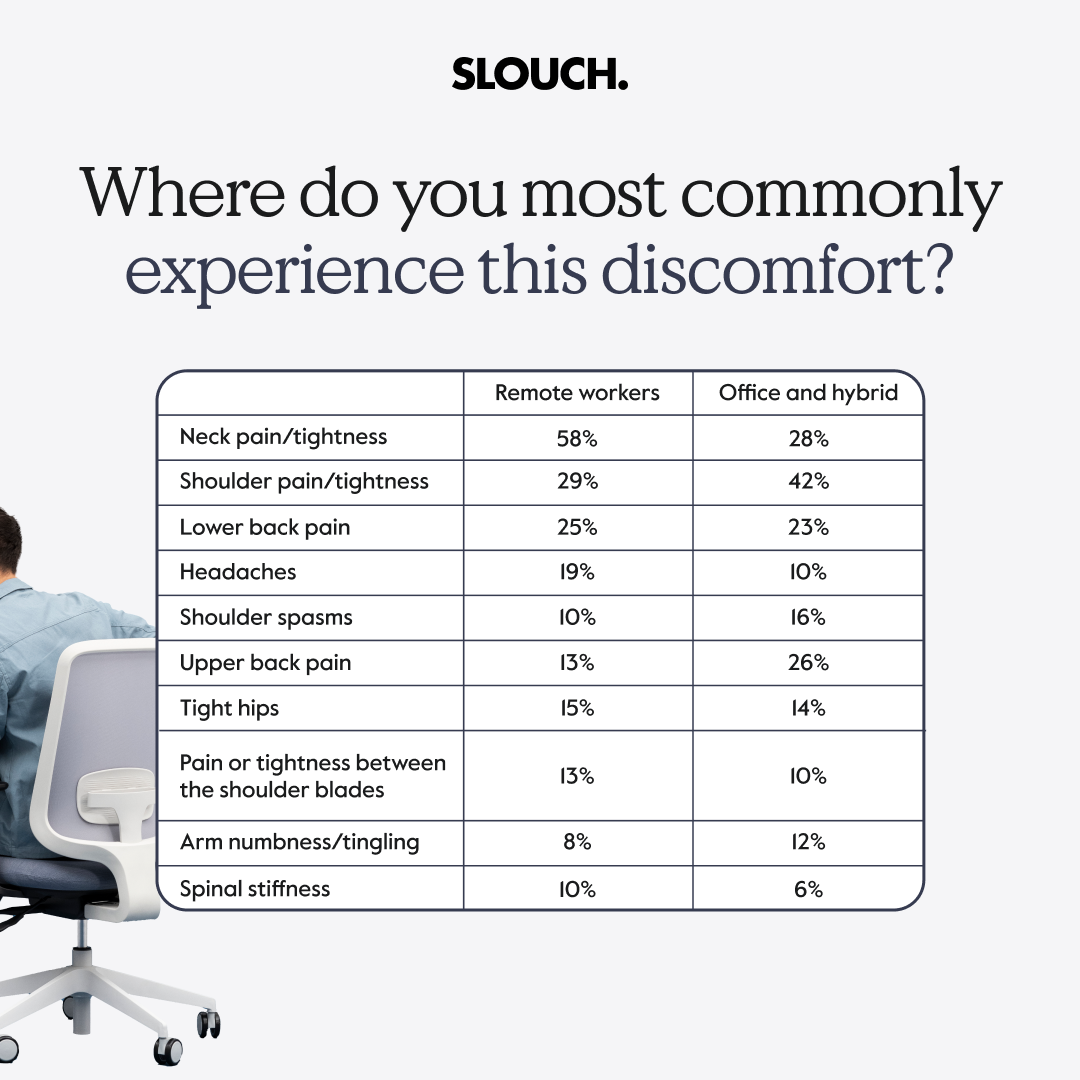
Nadia explains why this is: “Our bodies respond to how we use them day to day. Remote workers typically use less supported setups including their bed or sofa, which can cause their head to drift forward and the neck muscles, particularly the deep stabilisers and upper trapezius stay gently switched on for longer, causing that persistent tightness.
“Office-based workers are more likely to hold a fixed, upright posture for prolonged periods which can create a sustained load through the shoulders, especially in the deltoids and upper trapezius. It might be subtle and you might not notice at the time, but over time this strain builds up in the body.”
4 Movements Workers Should Follow To Support Health and Longevity
Whether you commute to work or are hybrid, you might wonder what sitting for eight-hour days does to the body. To help, Nadia has shared her favourite exercises for desk-based workers to help strengthen key muscles strained by your commute or sitting habits.
- Focus on strengthening hip flexors: “Sit against a wall and place a half litre water bottle next to you. Sit with legs straightened out and lift each leg up and over the bottle around 10 times on each side. This will strengthen hip flexors.”
- Release the neck and shoulders: “Slow, easy movements like softly turning the head side to side, or lifting and rolling the shoulders without force, can help release that feeling of built-up tension. The aim isn’t to stretch hard, but to remind those muscles that they don’t need to hold quite so much. These can even be done while sitting at the desk between meetings.”
- Strengthen your posterior chain: “A simple exercise to support this is by kneeling on all fours and lifting your opposite arm and leg up at the same time, before holding for three seconds before lowering. Repeat this 10 times daily to strengthen these muscles. This will help to prevent the curving of your spine, preventing the degeneration in your lower back.”
- Add gentle movement in for your lower back and hips: “Gentle mobility tends to go a long way. Small pelvic tilts, slow knee-to-chest movements, or even just standing and shifting your weight from one leg to the other can help bring some ease back into areas that have been still for too long.”
For more exercises you can incorporate at your desk, take a read: https://slouchonline.com/how-to-exercise-without-leaving-your-office-chair/
Sources:
*https://dataportal.orr.gov.uk/statistics/usage/passenger-rail-usage/
Methodology:
*National representative survey conducted across 1,000 UK office, hybrid and remote-based workers via TLF. The survey was carried out on 05/05/2026.
