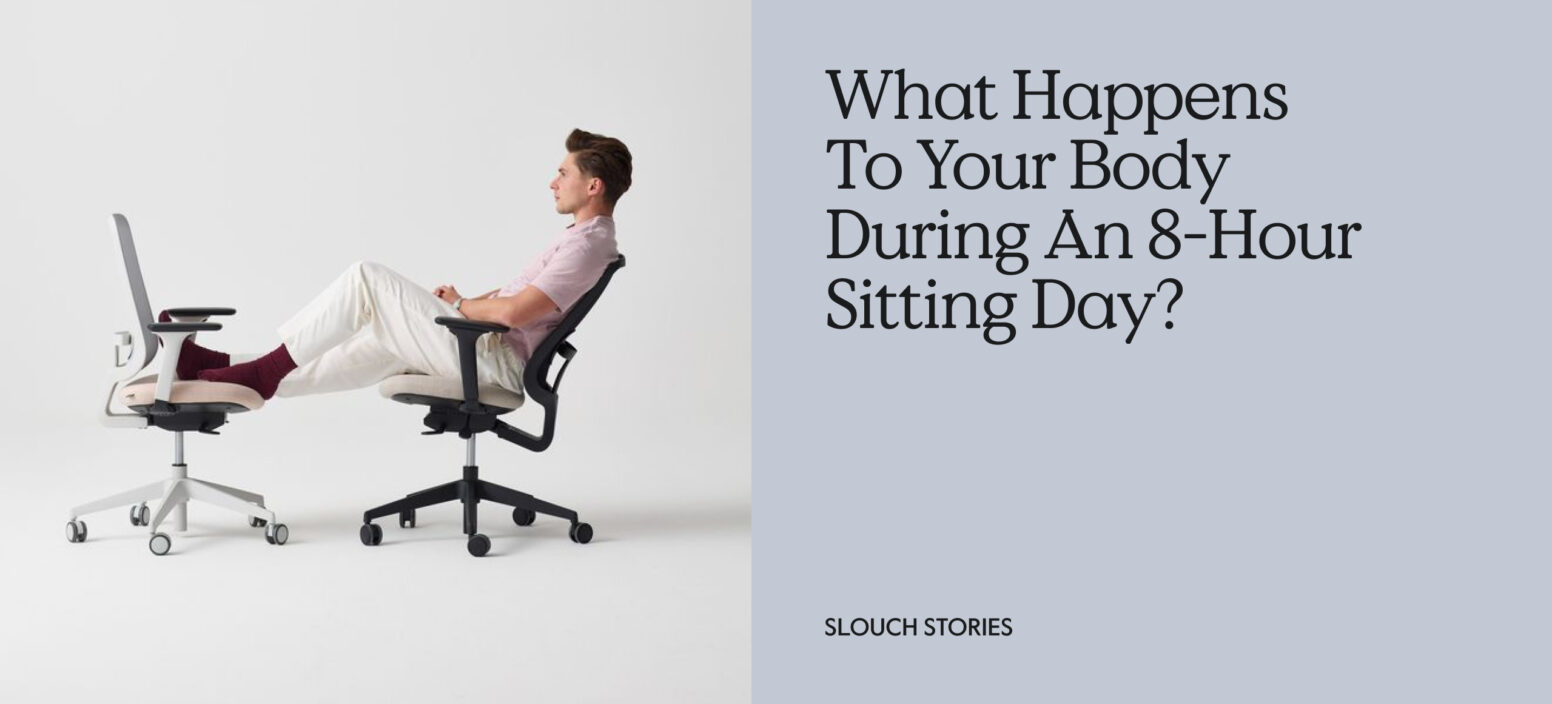
Tens of millions of people in the UK work office jobs – and if you’re one of them, there’s a good chance you spend the majority of your day sitting down. While sitting down generally doesn’t feel too taxing at the time, over a long enough period it can start to have noticeable effects on your body, and your general health.
Now, you may well have heard the word “ergonomic” before, and it’s not just a buzzword. OK, well technically it is a buzzword, but still, it’s a pretty important principle. An ergonomic workplace is one that’s specifically designed to fit your body and working position, and that can play a big role in protecting you from the chances of developing niggling issues like stiffness, fatigue, and eye strain.
You might even have noticed a couple of symptoms already. If so, the good news is that it’s not too late to do something about them. A little bit of awareness goes a long way, so here we’ll lay out a couple of the most common physical issues that desk-based teams often face. We’ll also look at how best you can avoid them, so you can keep yourself happy and healthy throughout the working day.
A quick look at some of the biggest issues
Spending long periods sitting at your desk can often lead to changes in how your body feels and how easily you’re able to stay focused – especially if you’re not standing, walking, or changing position very often.
It can be a particular problem for remote or hybrid teams, as remote workspaces aren’t standardised like office environments are. An ad-hoc setup can put a surprising amount of pressure on your body if it’s too cramped (for example), or you’re using furniture that’s not designed for proper office work – like bar stools, which offer no support for your back. One of the many reasons why proper home office chairs are particularly important!
Now, one thing worth bearing in mind is that if you ever do notice a symptom, it doesn’t always appear in isolation – so changes in your posture, movement and focus tend to influence each other throughout the day.
Here are a couple of the most common ones to look out for.
Musculoskeletal strain and posture-related issues
Your body relies on constant small adjustments to maintain your balance and alignment. When you’re sitting down for long stretches at a time, those adjustments can become a lot more limited, which then places a lot more demand on specific muscle groups. Not ideal. For example, if your spine stays in a seated position for too long, that can build pressure in your lower back, and tighten your hip flexors. This can lead to tension throughout your back, neck and shoulders, which is why you might get those annoying aches and pains from time to time.
Circulatory and metabolic effects
The movement of your body keeps your circulation active, especially through your legs. If you’re sitting down for hours without moving from your chair, the reduction of movement can eventually slow the flow of blood through your lower body. Over a long enough period, this may eventually leave your legs feeling heavy, or slightly swollen after a while. At the same time, lower muscle activity can affect how your body uses energy, which may then influence how alert you feel during the workday.
Cognitive impact and overall wellbeing
The overall health of your body has a direct knock-on effect to how well you concentrate. Long uninterrupted stretches of screen use can place steady demand on your eyes, while a fixed posture can make it hard to stay comfortable, especially if you’re hunched over. If you end up feeling too uncomfortable, that can eventually start to affect your focus, and your energy can feel less consistent. This can make you less productive, however motivated you are.
How a well-designed chair can help
A well-designed office chair plays a direct role in how well your body is able to manage a full day of sitting. In fact, the best office chair for all-day use is one which works with your posture, helping your spine to maintain its natural shape while also reducing unnecessary pressure through your lower back. The main thing is that it allows your body to stay supported in a way that feels natural – which helps you stay comfortable, maintain your energy, and keep your focus where it needs to be.
Maintaining your spine’s natural curves
Your spine has a slight natural curve in it, so a well designed chair can help your posture to stay aligned without constant effort, especially through your lower and mid-back. Over time, this can ensure your body stays more balanced, so there’s less strain building up throughout the day. It also reduces the need to keep correcting how you sit as the day goes on.
Reducing pressure through your lower back
It’s a bit of a cliché to hear people complain that someone has changed the lumbar support on their chair – but in fairness, they’ve often got good reason to be annoyed. Good lumbar support helps to spread pressure more evenly across your lower back, which prevents one area from carrying too much of the load during long periods of sitting. As the hours pass, this can help reduce the strain in your lower back, and enables you to stay in a more stable position across longer working sessions.
Encouraging better circulation through your lower body
A seat that positions your legs properly will help your feet to stay flat and your knees to sit at a natural angle, which allows blood to move more freely through your lower body during long periods of sitting. With less pressure through your thighs, your legs are less likely to feel heavy or uncomfortable as the day goes on, helping your body stay more responsive while you work.
Allowing your posture to change more freely
Adjustable features give you the freedom to shift your position throughout the day without interrupting what you’re doing, changing how your body is supported with small alterations like adjusting your seat height or leaning back slightly. This prevents your body from settling into one fixed position for too long, allowing your muscles to relax and adjust more naturally as the day progresses.
Reducing strain through your shoulders and neck
Armrests are one of the best ways to give your arms proper support, as long as they’re set to the right height and width. This takes pressure away from your shoulders and neck while you work. Over time, this can help limit the build-up of tension in your upper body, helping you to stay in a more relaxed and supported position throughout the day. Our Task One grey office chair is an especially popular option.
What to look for in an office chair
| Feature | Why It Matters for All-Day Sitting | What to Look For |
| Lumbar support | Maintains the natural inward curve of the lower back, reducing disc pressure and muscle fatigue | Adjustable in height and depth – not a fixed foam bump |
| Seat depth | Affects thigh circulation and lower back support – too deep or too shallow causes problems | 2 to 4 inches of adjustment range; edge should be 2 to 3 finger-widths from the back of the knee |
| Seat height | Determines whether feet sit flat and thighs are supported without pressure | Pneumatic adjustment; should allow knees at approximately 90 degrees for your height |
| Armrests | Reduce upper trapezius and shoulder load throughout the day | Height, width, and pivot adjustability – should allow shoulders to rest naturally |
| Back recline | Allows postural variation without leaving the chair, reducing static muscle fatigue | Tension-adjustable recline or dynamic sync mechanism; lockable at multiple angles |
| Seat material | Affects temperature regulation and pressure distribution over long periods | Breathable mesh or high-density foam with adequate support – avoid hard plastic bases |
| Headrest | Supports the cervical spine and reduces neck load during reclined working | Height and angle adjustable – should support without pushing the head forward, like our Task One Black Office Chair |
A few more useful tips for staying active
Even the best-designed chair can’t completely stop the effects of staying in a single position all day, especially if you’re not moving for long periods at a time. So in addition to sorting out an ergonomic office chair and workspace setup, it’s still a good idea to make sure you’re staying active. A few simple adjustments throughout the day can really help. Here are our top suggestions:
- Get up and move regularly – short breaks away from your desk keep your muscles active and help your circulation move more freely through your lower body to reduce stiffness as the day goes on
- Change your position throughout the day – small shifts in how you sit spread pressure more evenly and stop your body staying fixed in one posture for too long
- Stretch key areas – your hips, lower back, and shoulders can tighten during long periods of sitting, so occasional stretching helps ease that tension and keeps your movement feeling more natural
- Set up your screen properly – keeping your screen at the right height helps your head and neck stay aligned, which reduces the urge to lean forward or look down
- Take breaks away from your screen – looking away at regular intervals helps reduce eye strain and gives your focus a chance to reset during longer working sessions
The right office chair makes a big difference
When you’re sitting at a desk for around 8 hours each day, then your health, focus, and overall wellbeing will all link directly back to the chair you use. The way you sit, the way you move, and the way you feel throughout the day – it’s all affected by this one point of contact. So it’s worth taking the time to ensure you’ve got the right one.
That’s exactly where we can help here at Slouch. We’re a design-led company with more than 45 years of experience in providing modern, well-crafted office furniture to some of the UK’s biggest brands. We design chairs for full-day desk use, with a range of ergonomic features such as adjustable seat height, tilt control, and lumbar support that helps distribute pressure through your lower back.
In short, we make office furniture that works for you.
