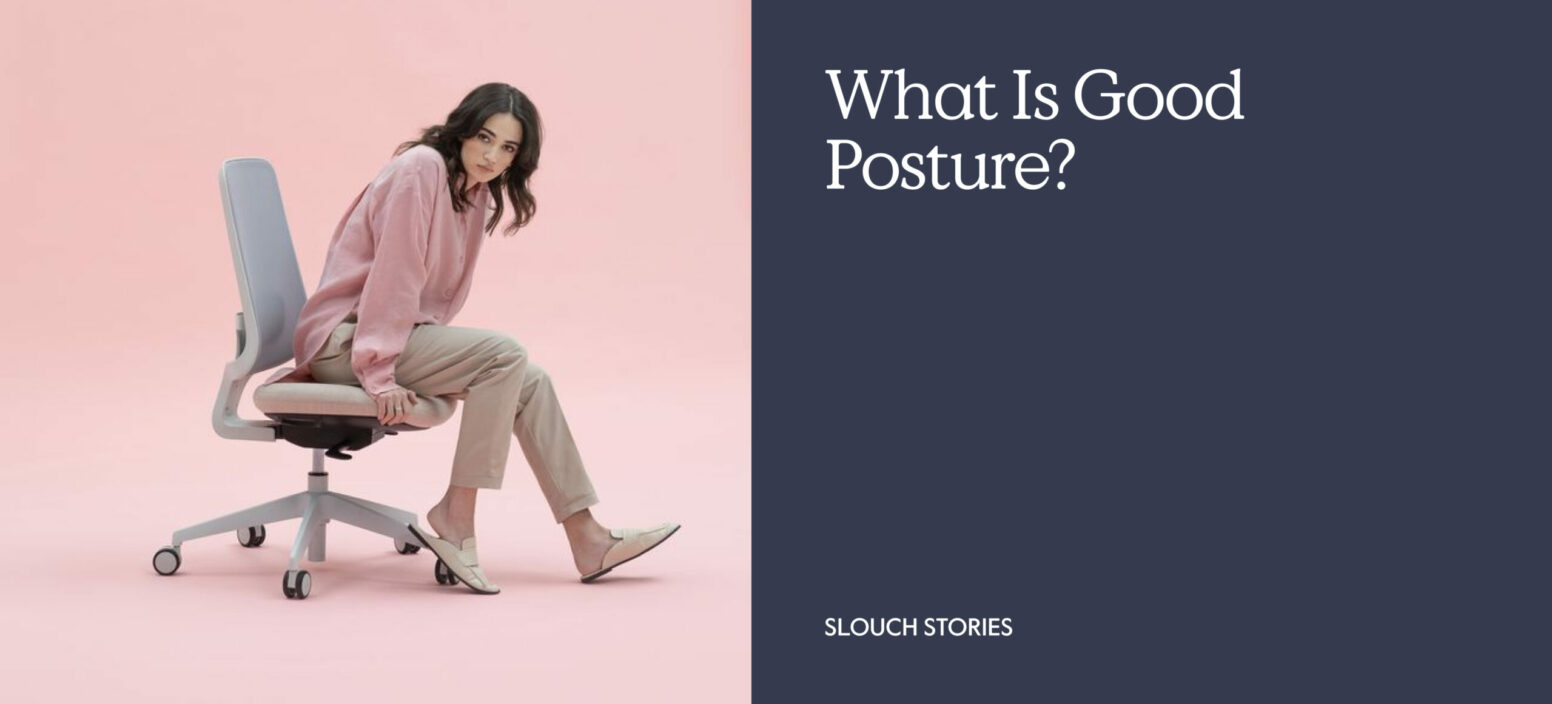
We’re told time and again that posture is important, and that we all have terrible posture because of the amount of time we spend on a computer or our phones.
You might even have seen the life-size model, questionably named Emma, that predicts what office workers will look like in 20 years’ time (we really hope not). It’s assumed that we’ll all become the Hunchback of Notre Dame because we aren’t designed to spend 8 hours a day sitting at a desk.
And posture isn’t just about sitting well to feel well; there’s so much more to it than that. Posture is an essential part of long-term health. It’s about sitting or standing in a way that is most natural and supportive for your body to avoid pain and injury.
There’s good posture, ‘meh’ posture, and bad posture, when you’re slouching so far over your desk that it looks like you’re actually going to topple off your chair. No matter which bracket you fall into, our guide to good posture should be enlightening and helpful, so read on to find out more about how you should be sitting when working at your desk.
What does posture mean?
Posture is simply a word that describes the way you sit and stand. There is dynamic posture, which is how you hold your body when you’re moving, such as walking or running. Static posture is how you sit, stand or sleep.
Everyone’s body is different, which means everyone’s posture is slightly different too. But generally, good posture comes from your spine. The spine has three natural curves:
- The cervical spine of your neck, which runs down into the top of your back
- The thoracic spine, which is the middle part of your back
- The lumbar spine, which includes the small of and your lower back
These three curves produce the classic S-shape that is there to keep our back limber and flexible for maximum movement.
‘Good’ posture is all about maintaining these curves without increasing them, such as extending your neck too far forwards or hunching the top of your back while you sit at your desk.
How does posture affect your health?
Posture can affect your health in more ways than you might think. When you slouch instead of sitting upright in the way our bodies are designed, it can:
- Cause pain, particularly in the neck, shoulders and back
- Decrease your flexibility
- Impact your joints and how they move
- Have a negative impact on your balance
- Begin to wear areas of your spine away
- Affect your breathing
- Cause a misalignment of the spine.
While these things might seem scary, there are things you can do to promote good posture instead, and this generally involves moving more. We all spend lots of time looking at computer screens and looking down at our phones or to read a book, so it’s important that you also stay active. This could be walking, doing yoga or pilates (great for strengthening those stomach and back muscles), running, swimming, tai chi, your choice!
How can you maintain good posture while working at a desk?
Now, a topic we love to talk about. As manufacturers of top-quality ergonomic office chairs, we’ve done all our research into sitting and posture to design the perfect chair that is both supportive and lovely to look at. You can generally improve your posture while sitting at your desk by:
Moving around more often
Funnily enough, the way to beat the aches and pains that come with sitting is by moving. It’s important that you regularly switch positions, get up to stretch your legs every now and then (ideally every hour) and even do some office desk exercises to get the blood flowing again.
If you wanted to, you could invest in two different types of office chairs that encourage different seating positions, such as a kneeling chair (though these aren’t generally recommended for long-term use).
Ensuring your workspace is set up ergonomically
Not every workspace is made equal, and you must make sure that yours is ergonomic so that you can practise good posture to reduce aches and pains. An ergonomic workspace is one that feels natural without putting a strain on your body.
Your computer or laptop screen should be at eye level, so you don’t have to look up or down with your neck while you work. Your elbows should be bent at a 90 to 120 degree angle, and your knees should be at 90 degrees, with your feet flat on the floor (a footrest can help with this sometimes).
An ergonomic office chair is fully adjustable, so you can change the seat tilt, the seat depth and the arm rest height so there are no limitations on how your body can sit.
Finally, your office chair must have good lumbar support. Without this, good posture may be impossible.
How can you practise good posture when standing?
People forget that you should have good posture when you stand as well as sit. You should stand up straight, keeping your shoulders back while pulling your stomach in (not sucking it in though, as that’s different).
When standing, your weight should be mostly on the balls of your feet, and not on your heels or your toes. Try to keep your head level, without extending it too far forwards, as this will put a strain on your neck.
Standing posture is particularly important when using a standing desk. With poor posture, you will probably tire more easily, or feel pain in your legs, hips, and shoulders.
What is the best chair for good posture?
We might be biased, but then we were rated the best overall office chair by the Guardian (just sayin’).
The best chair for good posture is an ergonomic office chair, such as our TaskOne chair. Designed and engineered by experts, it’s built for comfort and support, providing years of bliss while you work at your desk. The quality moulded seat foam provides all the padding you need, while the adjustable lumbar support ensures a perfect fit, no matter your height.
Other adjustable features include tilt tension, forward tilt, arm rest height and seat depth. When all of these things are adjusted to your specific body, you’ll find it much easier to maintain a good posture all day long.
