If you work from home, you’ve probably spent more time than usual thinking about your posture.
Whether it’s a twinge in your lower back or an all-too-familiar tightness in your shoulders, it’s natural to look for a solution that promises a quick fix for your seating setup.
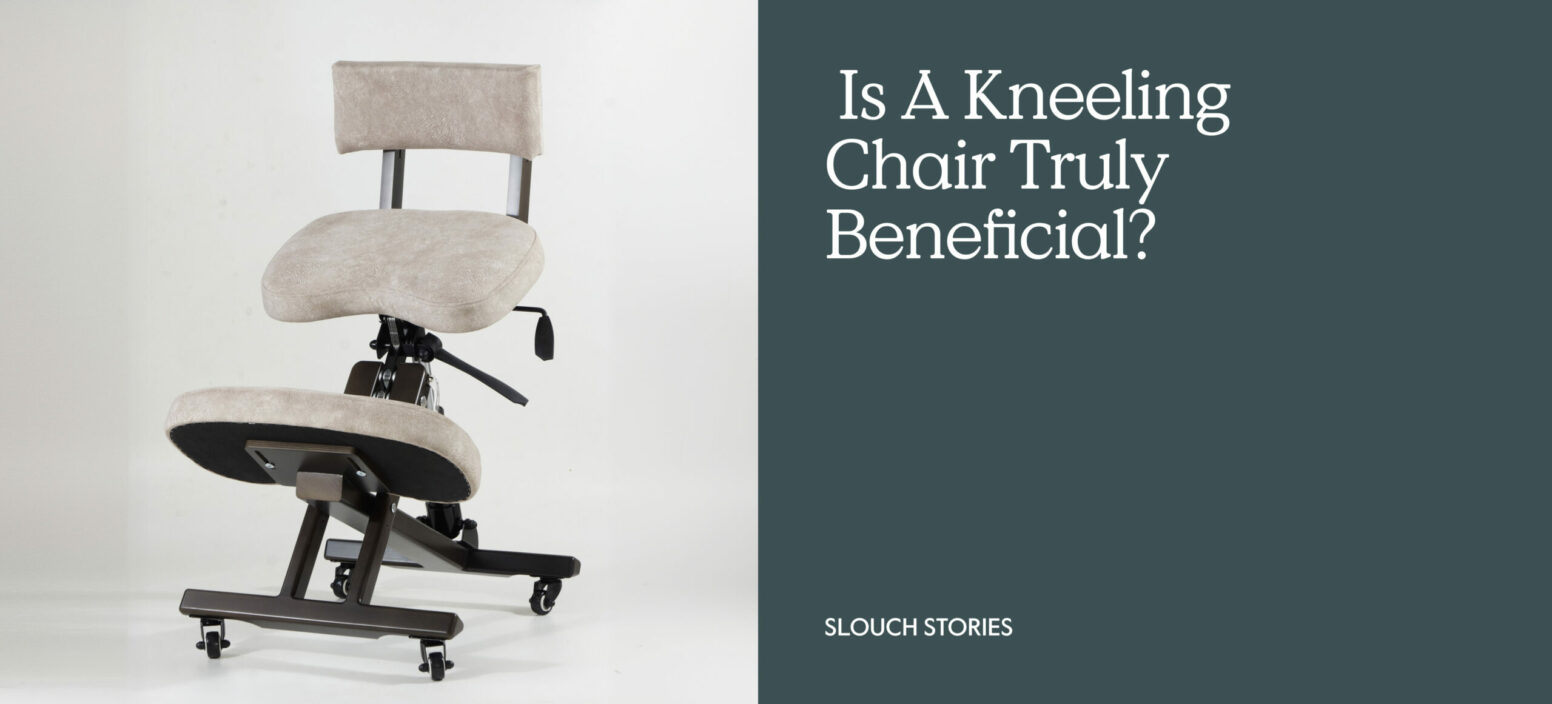
The kneeling chair looks a world away from your standard office chair, and it’s often touted as the secret to perfect posture. But is it really the game changer it claims to be or just another home office chair fad?
Below, we have analysed some of the pros and cons of kneeling chairs to help you answer the ultimate question: are they actually worth it?
Are kneeling chairs good for you?
The short answer is, only in small doses.
Kneeling chairs were first developed in the late 1970s as a way of reducing lower back strain. The design encourages you to tilt forward, opening up your hips and keeping your spine in a more natural curve. By shifting some of your weight onto your shins, the chair takes the pressure off your lumbar region.
While they were invented to tackle the issues caused by traditional and (frankly) poorly designed chairs, they weren’t necessarily built for an eight-hour shift and they lack many of the support features that we’ve spent decades perfecting in our ergonomic chairs. They do, however, serve the specific purpose of encouraging “active sitting”.
3 kneeling chair benefits
If you’re considering adding a kneeling chair to your setup, here is where they can actually help:
- Better pelvic tilt
Kneeling chairs can actually support your pelvis and hips much better than a typical office chair. This is because they angle your thighs downwards, instead of at a 90-degree angle, helping to tilt the pelvis forward. This, in turn, opens the hips and helps to support the natural curve of your spine, reducing the slump that many people fall into after sitting at their desk for a short time.
- Core engagement
Kneeling chairs are great at building up your core muscles. When you’re sitting in a chair, your core doesn’t have to work at all. However, kneeling chairs don’t have a backrest and this means your core needs to be active to keep you upright.
This is why some people struggle to sit in a kneeling chair at first; they’re working muscles they haven’t had to work in some time. But you’ll find the more you use one, the more your muscles will strengthen and adjust.
- Reduced lumbar pressure
By moving the weight distribution away from the base of your spine and onto your legs, kneeling chairs can provide temporary back relief. More than anything, this can be a big help to anyone suffering from specific types of lower back pain.
But what are the downsides of kneeling chairs?
Despite the benefits, there are some significant drawbacks to consider before you swap your main chair out:
- Added pressure on the knees and shins
Your weight has to be supported somewhere and in a kneeling chair, this falls to your knees and shins. Over time, the pressure on your shins and the compression of your knee joints can become uncomfortable, potentially leading to circulation issues or joint pain if used for hours on end.
- Limited movement
In a high-quality ergonomic chair, you can lean back, swivel and adjust your position when you need to, but kneeling chairs trap you in one specific position.
With nearly half a century of engineering experience, we know that the best posture is your next posture and movement is key. With that in mind, kneeling chairs can be quite restrictive, with no real way for you to move through the day or even adjust your position.
- Lack of back support
Active sitting is great for short bursts, but eventually, your muscles get tired.
Without a backrest to lean into, your posture will eventually collapse, possibly causing even more strain than you started with.
So, what’s the verdict?
Although it is true that kneeling chairs can be a beneficial addition to your home office, they are best used as a supplementary seat rather than a full-time replacement for a proper desk chair.
Kneeling chairs are great for a 20-minute task to break up the day, but they simply aren’t built for the long haul.
At Slouch, we don’t sell kneeling chairs because we believe that the home worker needs a versatile and high-performance tool to support the body all day long. Our office chairs are rigorously tested to meet EN 1335-2 and BIFMA standards, providing the adjustability and lumbar support that a kneeling chair simply can’t match.
For more help finding the perfect office chair for you, you can take a look at our guide to the 12 types of office chair.
