There is more to creating the best home office than simply choosing some office furniture and calling it a day.
Most people assume that all it takes is a cheap chair and desk, and you can call any room your workspace. But actually, there are other things you need to consider, especially if you’re going to set up your office in your bedroom.
The last thing you need is the thoughts and clutter from your working day getting between you and your nighttime routine. We don’t know about you, but we really value our sleep at Slouch. You probably don’t want an office that takes up your entire bedroom with little room for anything else. But what you do want is a smart home office (that just happens to be in your bedroom) that is laid out correctly, functions as it should and allows you to be comfortable when working.
If you’re looking to create the most ergonomic, functional, and practical home office in your bedroom, then you’ve come to the right place.
We’ve listed our bedroom home office ideas and advice below so you can create the ultimate bedroom office.
1. Focus on the layout of your office
The first step, and something you want to prioritise at the start, is finding the right layout for your bedroom office. You want to find the right balance of bedroom vs. workspace, while also cleverly separating the two so the bedroom is still a place you can relax and sleep well in.
The best starting point is in front of a window. Put your desk here for maximum natural light, but also to prevent any glare on your screen. A study from Cornell actually found an 84% reduction in blurred vision, headaches, and eye strain amongst workers when exposed to natural light, so even more reason to sit close to a natural light source!
Then you need to think about how you can divide your room so there are two zoned areas: bedroom and office. There are definitely ways you can do this stylishly and subtly, including with a rug. Rugs are great for zoning, so just having a rug under your desk will help to define that area as your working space.
From a design perspective, think of a theme for your home office beforehand, be it modern, vintage, quirky, colourful, calming, etc. Then choose a themed/textured rug to place under your desk, which clearly defines your workspace.
If you have the space to do so, you can add a folding screen or even fit a hanging curtain around the desk area to separate your office from your bedroom. This will allow you to easily hide your office space away at the end of the day and focus on unwinding and relaxing.
2. Choose the right size desk
Hopefully, by now, you have your bedroom office all mapped out, but it wouldn’t be an office without a suitable desk to work from.
It can be tempting to rush in and buy the first desk you see online. BUT plan, plan and plan. Do all the measurements first to ensure you aren’t buying a desk that’s too big, too small (or insert other issue here). It also needs to be comfortable to work from, so consider an ergonomic desk that can be properly adjusted to suit you.
When creating a bedroom office, really think about how much space you want your desk to take up, and also the size of desk you actually need. Probably not worth having a two-metre long monstrosity when it’s just you and your laptop.
Something compact that could fit into a small, unused corner that you’ve previously been unable to fill would be ideal for a bedroom office. Make sure you take your time to measure the space and know exactly where you want to place your new desk.
An adjustable desk is great for making the switch between sitting and standing. When working for long periods of time, this kind of feature is ideal to help reduce back pain, improve posture, and increase your energy levels. A fixed desk can work just as well, but protecting your back and neck is always important, no matter where you work from, and an adjustable desk will reduce any discomfort.
3. Find an office chair to match your desk
Now that you have the desk, you need a quality, comfortable chair to match.
We know it might be tempting to sit on your bed while you take work calls or write out an email, and for a short amount of time, it can be cosy, but if you’re working for hours at a time, then this process isn’t great for your back.
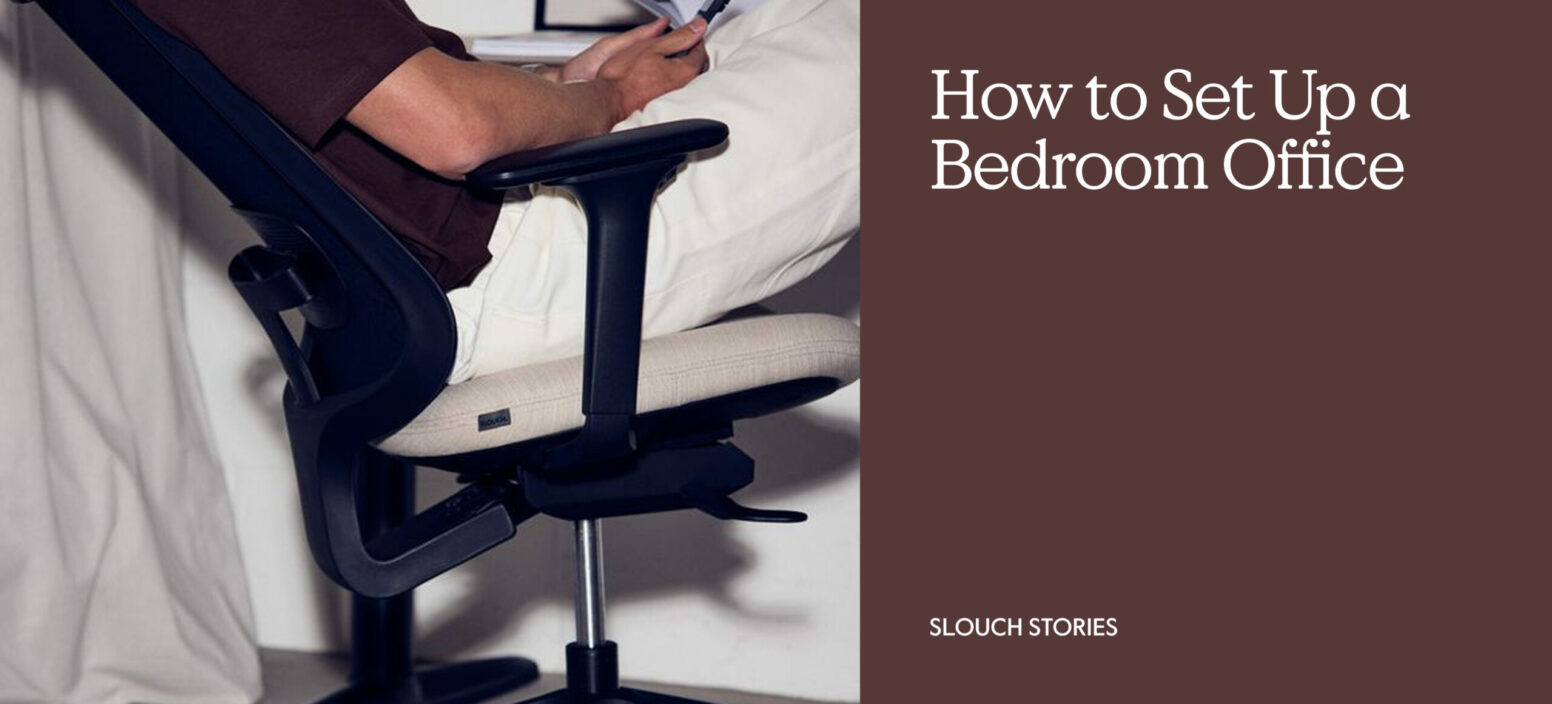
You want to be comfortable when sitting at your desk, so choose an ergonomic home office chair that has some key features, such as adjustable seat height, a backrest, and a chair tilt and recline. All of these help to provide support for your back and help you maintain good posture at your desk without straining your arms or neck.
As well as having the right ergonomic features, you still want the bedroom office to fit the aesthetic you’ve chosen, so choosing a chair that is the right colour and material will help to define your desk area further. That’s why our chairs come in a range of soft colours, from muted pink to soft grey, and can be customised to suit your needs.
Once you’ve chosen your chair, take some measurements to ensure it fits under your desk properly, and it’s not taking up too much space in your bedroom.
4. Make the space your own
Now, you’ve nailed the practical stuff. You’ve figured out what furniture you need and where it’s going. But you also need to think about designing your bedroom office around you and the way you work, and not just what looks good online.
This is where you can personalise it to suit you. Does your work involve lots of video calls that might require good lighting and a tidy, distraction-free background? Do you do lots of creative work that means you need space for a sketchpad or graphics tablet? Consider where these things will go within the space, particularly to make it as functional as possible.
Next, it’s the fun part. Time to personalise the space and make it feel like you. What about some framed photos, artwork you love, houseplants, candles or even a colourful desk mat? These little details can soften the workspace and make it somewhere you actually enjoy spending time.
When you work in your bedroom, the temptation to collapse in a heap on your bed and work from there is real, but it won’t do any good for your back. You can still be cosy and comfortable when working from home without compromising your style or your spine.
