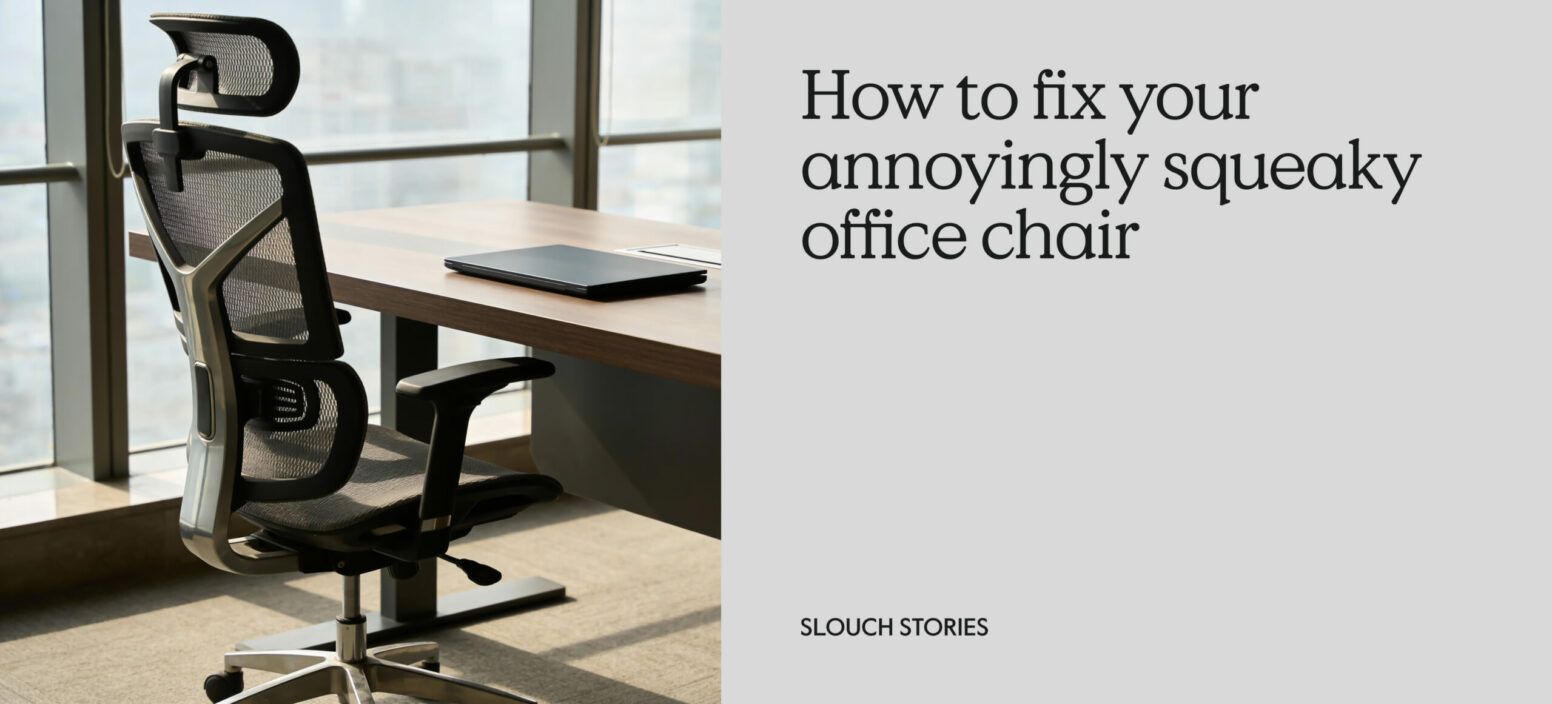
Squeak. Squeak. Squeaky-squeak. Annoying isn’t it? And if that’s what you’re hearing throughout your entire work day, it’s going to distract you.
If you’ve put up with the issue for far longer than you should, it’s time to fix it, which is probably why you’ve landed here. In most cases, it’s a minor problem that will take 10 minutes to resolve, so let’s get into why your chair could be squeaking and how to fix it.
What causes a squeaky office chair?
Parts that are too loose
Your chair moves a lot throughout the day (it needs to in order to support your body and its natural movements), and all that tilting, twisting, turning and rolling is inevitably going to loosen bolts and screws over time. As these parts come loose, they create friction which is the cause of the noise.
Parts that are too tight
Yep, overtightening the screws and bolts in your chair can actually make the squeak worse. Who knew? They begin to press too firmly against each other, creating the same kind of friction as loose parts. If you’re tightening things up to reduce the squeak, keep this in mind.
Unstable chair legs
The base could be the source of the squeak if the chair wobbles or rocks slightly when you sit on it. A five-wheel base that isn’t sitting right can cause subtle movements, which in turn creates noise.
A worn tilt mechanism
The tilt mechanism (which is the metal assembly underneath the seat that allows you to lean back) relies on several moving parts, all of which need to move smoothly in unison. As the lubrication naturally dries out over time, the components start to wear down and results in friction and squeaking.
Other worn parts
There are lots of other small parts in an office chair that can wear down and cause a squeak, including springs, axels, gas cylinders and plastic connectors. When dust and debris gets into such small parts, you guessed it: friction.
How to fix a squeaky office chair
First, there are some tools you may need to hand, including:
- A screwdriver – both Phillips and flathead depending on the screws your chair has
- An allen key
- WD-40 or a silicone-based lubricant
- A clean cloth
- A small bag for hardware that you remove
- An old blanket or sheet for the floor.
Step 1: Find the source
You can’t fix the squeak until you know where it’s coming from, so flip your chair upside down (gently) and have a good root around for the cause. Try wiggling the base and turning each of the caster wheels individually. If that isn’t the issue, turn your chair back the right way and test some other parts of the chair. Does it squeak when you lean back, when you adjust the height, when you use the armrests?
You can slowly start to narrow down the exact area that is squeaking so you can do a bit more investigation in step two.
Step 2: Tighten any loose parts
All that rolling, tilting and adjusting can cause parts to come loose over time, resulting in an annoying squeak. Before trying anything else, use a screwdriver or allen key to tighten screws and bolts that feel a bit loose, while also being careful not to overtighten, as that can cause the parts to rub together causing more squeaking.
Work methodically so you don’t forget which sections you’ve already done. You could start with the bolts that connect the backrest to the seat, and then check the armrests, the underside of the seat and around the base.
Step 3: Apply WD-40 to the mechanism
If you think it’s the tilt mechanism that’s squeaking, it could be down to lack of lubrication. After years of use, the lubrication in the mechanism can dry out and so the metal parts rub directly on each other. Some WD-40 will help to lubricate the area and reduce the noise, a handy water-resistant lubricant that has lots of uses.
Spray the WD-40 where the tilt mechanism connects to the seat base, give the seat a spin and then sit in the seat, leaning back to activate the tilt and bounce it a few times to really get the solution into the joint. If it’s the mechanism that’s the issue, the squeak should disappear almost straight away.
Step 4: Check each wheel individually
If none of the above has worked, it could be the caster wheels causing the issue. Casters can gradually begin to rub over time, creating that squeaking sound that’s irritating you so much.
You can remove the wheels one at a time to find the culprit by pulling them away from the base, and check them for wear, rust or debris. Clean any visible dirt away and then apply a small amount of WD-40 to the axle of each wheel, then push it back in.
If it is the wheels, you may need to get replacements that haven’t worn away as much.
Step 5: Replace any rusted parts
Chairs that are made from metal could be prone to rust, particularly in a relatively humid environment like an office. It’s generally best to replace rusted parts with new ones, where possible, but if the rust has really set in, then a brand new ergonomic office chair could be on the cards.
When it’s time for a new chair
If you’ve worked through each step above and the squeaking still persists, then it might be a sign that the chair’s internal mechanism is worn beyond the point of repair. The tilt mechanism in particular is not designed for home disassembly, and if it’s the source of the noise, a replacement part or a new chair is likely the more practical solution.
You can view our range of home office chairs, designed with ergonomics and support in mind to help you stay focused and free from aches and pains.
